
No one likes ants, roaches, spiders or mosquitoes in their house. Many people’s initial instinct is to grab a can of chemical spray, but these products tend to have strong smells, harsh chemicals and warnings about keeping kids and pets away. The good news is that a natural pest killer can be just as effective, without any of those concerns. In this Decoradyard Tip tutorial, we’ll go over simple, safe and economical ways to deal with pests using things you probably already have around the house.
Why Choose a Natural Insect Killer Over Chemicals
Store bought sprays work swiftly, but leave a chemical residue on counters, floors and furniture. If you have tiny children that crawl on the floor or pets that lick everything in sight, this residue can become a big problem. This is where eco-friendly pest control comes in. They do this with materials such as vinegar, soap, essential oils and plant extracts that dissolve the outer layers of bugs or mess with their senses, but without the poisonous residue that chemical techniques leave behind.
Another reason why people are choosing chemical free bug control is the cost. Chemical sprays can be costly especially if you have to spray your whole house often. Many natural remedies are simply a few dollars and employ things already sitting in your kitchen cupboard.
What Makes a Natural Bug Killer for Home Effective
You don’t have to have complicated things to have a good natural insect killer for home use. Most of the best natural remedies function through one of three mechanisms. They dehydrate the insect, smother it or interfere with its sense of smell so it can’t locate food or a way back into your home.
Search for recipes that use ingredients such as dish soap, baking soda, borax or diatomaceous earth to create a safe bug killer for use in your home. When used correctly these are low risk to humans and pets, but very effective at breaking down the exoskeletons of insects such as ants, roaches and silverfish.
Easy Homemade Insect Killer Recipes You Can Try Today
If you want a homemade insect killer that actually works, here are a few tested options.
Soap and water spray. Mix a few drops of dish soap with water in a spray bottle. This simple homemade natural insect killer works well on soft bodied insects like aphids and gnats. The soap breaks down their protective coating, causing them to dry out.
Vinegar spray. White vinegar mixed with water in equal parts makes a strong natural pest repellent. Spray it along windowsills, doorframes, and other entry points. Ants and spiders dislike the smell and tend to avoid treated areas.
Essential oil spray. Peppermint, tea tree, and eucalyptus oils mixed with water make an excellent natural bug repellent for home use. Spray around baseboards, under sinks, and near entry points. Many insects find these scents overwhelming and will stay away.
Diatomaceous earth. This powder is made from fossilized algae and works wonders on crawling insects. Sprinkle it along baseboards or outside your home’s foundation. It is one of the most reliable forms of organic pest control available.
Natural Pest Repellent Ingredients Worth Keeping on Hand
Beyond sprays, certain household items double as a natural pest repellent on their own. Bay leaves placed in pantries help repel pests like moths and beetles. Citrus peels left near entry points discourage ants. Cucumber slices are a classic trick against cockroaches, since the bitter taste repels them. Keeping a small stock of these items means you always have a backup plan when you spot a new bug problem, without needing to run to the store for a chemical product.
How to Get Rid of Insects Naturally Room by Room
Knowing how to naturally get rid of insects in each location makes a great difference because various rooms attract different bugs.
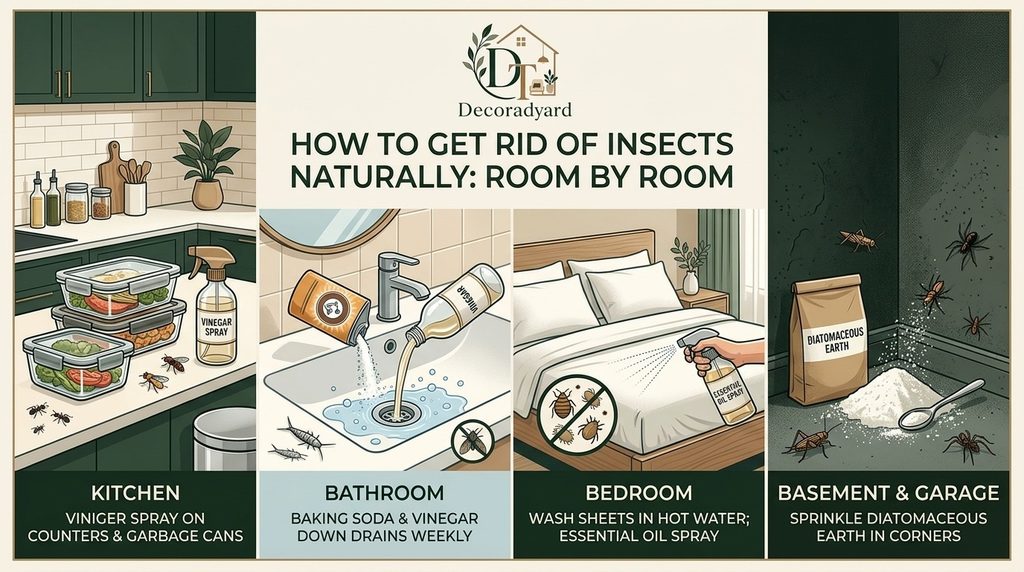
In the kitchen keep counters clean and keep food in locked containers. Vinegar spray works great on counters and around garbage cans, where ants and fruit flies like to gather.
Moisture in the bathroom will bring silverfish and drain flies. Pour a mixture of baking soda and vinegar down the drains weekly to keep them away.
In the bedroom, bed bugs and dust mites are regular worries. Frequent washing of sheets in hot water and lightly spraying mattress seams with an essential oil spray may assist.
Spiders and crickets love to hide in the dark corners of basements and garages. Sprinkling diatomaceous earth in these locations provides long lasting protection.
Organic Pest Control for Your Garden and Yard
Insects are not only an inside problem. Your outdoor places need your care too. You can plant marigolds, lavender and citronella in your yard, all of which are natural mosquito and other flying bug repellents. Gardeners seeking home insect control without harming beneficial insects such as bees and ladybugs can believe on neem oil as one of their best options. This oil mixed with water and sprayed on plants is a natural insecticide.
Standing water is one of the greatest reasons for mosquito infestations. Emptying birdbaths, gutters and other containers that collect rainwater will go a long way to eliminating bites around your home.
Choosing the Best Natural Insect Killer for Home Use
The best natural bug killers for the home depend on the pests you have because there are many choices. Diatomaceous earth and vinegar sprays are great for use against crawling insects such as ants and roaches. Essential oil sprays and plant based repellents are more effective for flying insects such as mosquitoes and fruit flies.
If you’re looking for a natural insect killer for home usage that will take care of more than one pest at a time, a combination approach generally works better than a single method. Layered Protection: Use Vinegar at Entry Points, Essential Oils Indoors, Diatomaceous Earth Outdoors All Over Your House
Natural Ways to Kill Insects Without Harming Pets or Kids
Safety is one of the major advantages of these approaches. Common sense is usually all that is needed to ensure that natural techniques of killing insects are not seriously dangerous to children or pets. Especially keep essential oils away from cats; some oils can be toxic to them in concentrated form. Most natural recipes are safe enough to use around the house without clearing the room beforehand, unlike many chemical sprays that require ventilation and waiting periods.
Household Pest Control Habits That Prevent Infestations
But killing bugs you can see is only half the task. Good domestic pest management also entails keeping new bugs out in the first place.
Simple behaviors can go a long way toward keeping insects at bay. Seal any cracks around windows and doors, fix damaged screens and store food in firmly sealed containers. Emptying the trash regularly and wiping off counters after meals gets rid of the smells that attract bugs in the first place.
To prevent bugs outdoors, trim plants and trees away from the exterior of your house, because branches touching your house act as a bridge for insects to climb inside. Keep your mulch a few inches away from your foundation to prevent wetness that invites bugs.
Building a Pest Free Home for the Long Term
But killing bugs you can see is only half the task. Good domestic pest management also entails keeping new bugs out in the first place.
Simple behaviors can go a long way toward keeping insects at bay. Seal any cracks around windows and doors, fix damaged screens and store food in firmly sealed containers. Emptying the trash regularly and wiping off counters after meals gets rid of the smells that attract bugs in the first place.
To prevent bugs outdoors, trim plants and trees away from the exterior of your house, because branches touching your house act as a bridge for insects to climb inside. Keep your mulch a few inches away from your foundation to prevent wetness that invites bugs.
Decoradyard Tip: Natural Insect Killers
Decoradyard Tip is your go-to destination for practical ideas on natural insect killer solutions, home décor, outdoor living, and backyard landscaping ideas. We also offer quality Guest Posting, Content Writing, and Backlinks services to help businesses and bloggers build their online presence. If you want to share your expertise, visit Write For Us, and for publishing opportunities, collaborations, or service inquiries, feel free to Contact Us.
Final Thoughts
You don’t need to spray a toxic spray on every bug you see to get rid of bugs. With a mix of home-made recipes, smart preventative routines, and a few natural items readily available, you can keep your house cozy and pest-free all year long. Test one or two of these strategies to evaluate which works best for your particular pest problems and then expand.