
These days, more and more people want to live in a home that is comfy, eco-friendly, and cheap to run. That’s exactly what green home design gives you. It’s not about giving up style or comfort. When you build and power your home, you can make smart decisions that will help it use less energy, cost less to run, and leave less of an impact on the world. What does “green home design” really mean? Why is it important? This guide will show you easy ways to incorporate these ideas into your own space, whether you are building a new home or making changes to an old one.
What Is Green Home Design
Green home design, which is also known as eco-friendly home design or sustainable home design, is the process of planning and making a house in a way that doesn’t hurt the earth too much. This could be anything from the building materials to the tools to the way the house lets light and air flow through it.
Three key goals are often at the heart of a sustainable home plan. The first one is using less power. The second is being smart about how you use things like water and building supplies. The third is making the space inside healthy for the people who live there. These three goals work together to make a home that is better for the environment, your budget, and you.
There’s no need for an eco-friendly home to look different from any other home. In fact, the outside of a lot of green homes doesn’t even look green. The main difference is how well the home works, how much energy it consumes, how warm or cool it stays, and how long it lasts.
Why Energy Efficient Home Design Matters
The way you use energy is a big part of green home planning. The goal of an energy-efficient home design is to lower the amount of electricity a home needs to stay comfortable all year. There are some easy reasons why this is important. To begin, it costs less. Most of the time, heating and cooling costs are the biggest parts of a regular energy bill. An energy-efficient home needs less power to keep the temperature stable, which means that every month your bills will be less.
Second, it makes the environment less stressed. It is especially true when the energy comes from fossil fuels and the homes that use less energy also produce less pollution. Choosing home ideas that save energy is an easy way for anyone to help the environment without having to make big changes to their lifestyle. Third, it makes you feel better. A well-built home that uses less energy stays warmer in the winter and cooler in the summer with less work. Not as many drafts and hot and cold spots, and the whole house feels more even.
Green Home Features That Make a Real Difference
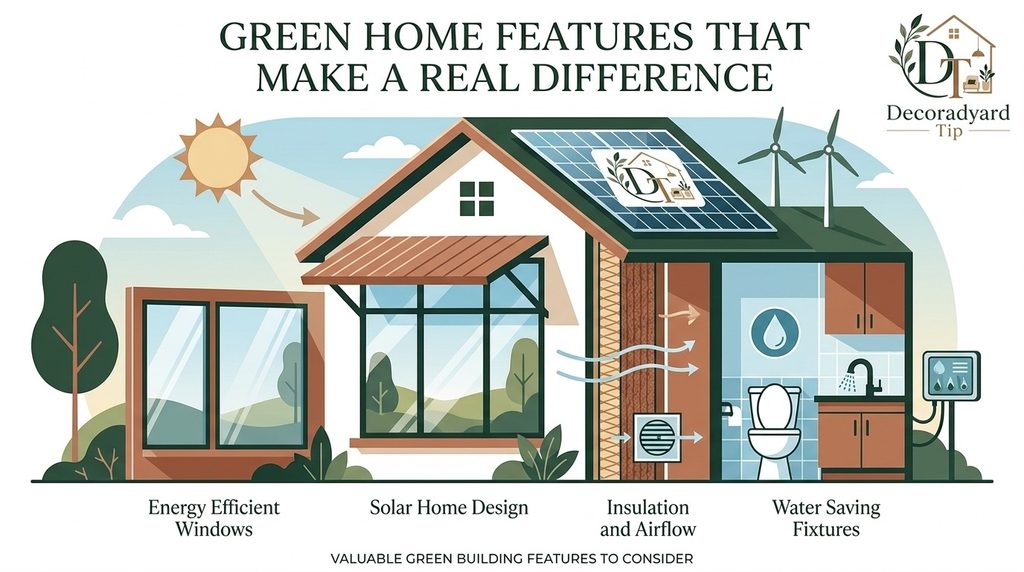
When people think about green home features, they often picture solar panels on the roof. While solar power is a great addition, it is only one part of a much bigger picture. Here are some of the most valuable green building features to consider.
Energy Efficient Windows
Windows play a much bigger role in home comfort than most people realize. Energy efficient windows are built with special glass and framing that keep heat inside during winter and outside during summer. This reduces the work your heating and cooling system has to do, which lowers your energy bills and makes rooms feel more comfortable year round.
Solar Home Design
Solar home design involves placing a house and its windows in a way that makes the most of natural sunlight and warmth. This can mean positioning larger windows to face the sun during colder months, while using shading, overhangs, or trees to block direct sun during hotter months. When paired with solar panels, a solar home design can significantly cut down on how much electricity a household needs to buy from the grid.
Renewable Energy for Homes
Beyond solar panels, there are other forms of renewable energy for homes worth exploring, such as small wind systems or geothermal heating in the right locations. These systems use natural resources instead of fossil fuels to power daily life, which supports long term home energy efficiency and reduces reliance on traditional utility providers.
Insulation and Airflow
Good insulation keeps conditioned air inside the home instead of letting it escape through walls, attics, and floors. Combined with proper ventilation, this creates a home that stays comfortable without constantly running the heating or cooling system.
Water Saving Fixtures
Many sustainable home features go beyond energy. Low flow faucets, efficient toilets, and smart irrigation systems all reduce water waste, which is another important part of building a truly sustainable home.
The Benefits of Green Home Design
Green home design has many benefits besides leaving less of an impact on the environment. This is a list of some of the biggest benefits that homeowners notice. People usually notice the benefit first when their monthly bills go down. Utility costs often go down a lot compared to a normal home when there is better insulation, energy-efficient windows, and smart energy use.
Another big benefit is better air quality inside. There are ventilation systems in many green homes that keep the air clean and fresh. The materials used in these homes also release fewer harmful chemicals into the air.
A higher selling value is also something to think about. As more people look for homes that use less energy, a house with green features that have been shown to work can often stand out and sell for more money. Durability over time is the last thing on the list. A lot of environmentally friendly building materials and methods are made to last longer and need less upkeep over time, which means you’ll save money on fixes in the long run.
Does Sustainable Home Design Cost More
People who own their own homes often want to know how much sustainable home design costs. Some environmentally friendly features, like solar panels or high performance windows, may cost more at first than regular features. But it’s important to see the bigger picture. Many upgrades that save energy pay for themselves over time because they lower your utility bills. For example, energy-efficient windows may cost more at first, but over time they can save you a lot of money on heating and cooling costs.
Green home ideas can also be found that don’t cost much or anything at all. Without spending a lot of money, you can lower your energy use by making simple changes like sealing air leaks, using a programmable thermostat, moving to LED lights, and adding more insulation. To make sustainable home design work, you need to see it as an investment that pays off over time, not as a one-time cost. Every little bit of smart choice can save you money and make your home more comfortable over time.
How to Make a Home Eco-Friendly on a Budget
You can make your home more eco-friendly without spending a lot of money. Here are some easy steps you can take right away. Air leaks around doors, windows, and vents should be sealed first. This is one of the cheapest ways to lower your home’s energy costs. Next, replace all of your light bulbs with LEDs. They use a lot less power and last a lot longer. Adding a smart or controlled thermostat is another easy and inexpensive way to better manage your heating and cooling during the day.
Simple choices about the yard can also help. Planting shade trees near windows that face the sun can cool a home naturally in the summer, so you won’t need to use air conditioning as much. On the inside of the house, stopping things when not in use and replacing old machines with ones that use less energy can also make a difference over time. These small steps show that you don’t have to do a full renovation to learn how to make your home more eco-friendly. It can begin with a few easy changes and habits.
How to Design an Eco-Friendly Home From the Start
If you are going to build a new home, you can make it more eco-friendly from the very beginning. Here is an easy way to do things. Start by figuring out how the house is laid out and facing so that it gets the most natural light and airflow. If you want to save money and time, make your choices about energy-efficient windows and good insulation as early as possible in the planning process.
When you can, choose building materials that will last and are good for the environment. Also, plan for renewable energy sources like solar panels for your home, even if you don’t install them right away. Finally, think about how to save water by picking fixtures and machines that use less water without losing their effectiveness. Every part of the house works together instead of being added on as an afterthought, which leads to some of the best green home design ideas.
Decoradyard Tip: Green House Design
Decoradyard Tip is your trusted destination for Green House Design, sustainable living, and practical Home Improvement Ideas. We share helpful, inspiring, and informative content covering eco-friendly home design, interiors, renovations, décor, and modern ways to create a comfortable and sustainable home. We also offer Guest Posting and professional Content Writing services for brands, businesses, and writers looking to share valuable ideas with a relevant audience. Interested in contributing or collaborating? Visit our Write For Us page or Contact Us to get started with Decoradyard Tip.
Final Thoughts
There is no such thing as a great green home plan. It’s about making choices that are well-thought-out and add up over time. With each step, you get closer to a more comfortable, affordable, and eco-friendly home. This is true whether you are building a brand-new sustainable house design or slowly updating your current home with better windows, smarter energy habits, and a few green home features.
Just about every homeowner wants their house to be more energy efficient, have lower bills, and be a healthy place to live. You don’t have to do everything at once, which is good news. Start with a few easy, low-cost ideas for green homes and work your way up. These small changes make your home better for your family, your budget, and the world around you over time.