

A good ceiling can affect the whole look and feel of a place. It can make a small space seem bigger, add warmth to a bedroom, or give a simple living room a polished architectural finish. It can hide wiring, increase light distribution and regulate the visual flow of a space. Modern fake ceilings offer a wealth of alternatives from subtle recessed borders to dramatic curves and structured grids. This article looks at popular styles, practical ceiling materials and lighting options, to help you choose a design that complements your room.
Modern False Ceiling Designs That Improve Style and Lighting
A good fake ceiling can totally improve the appearance and feel of a room with added depth, elegance and architectural character. The right ceiling design may totally change the atmosphere of a room. It can bring depth, flair and sophistication to your living space. Dropped ceilings or suspended ceilings, popularly known as false ceilings, can provide a lot of aesthetic value to your home with plenty of design options. In this detailed tutorial, we’ll explore several fake ceiling design concepts that can breathe new life into your rooms.
What Is a False Ceiling?
A false ceiling is an additional layer, which is built below the original structural ceiling. It can be all over the surface or merely around some places like the perimeter of the room, dining space or the entertainment zone.
The space between the two ceilings can hide electrical wires, pipes, air-conditioning ducts and lighting fixtures. A well-designed fake ceiling can also improve acoustics, add visual depth and separate different zones in an open-plan room.
Popular Ceiling Materials
The choice of material influences the ceiling’s appearance, durability, cost, and maintenance requirements. It has to be in harmony with the humidity of the space, the height of the ceiling and the general design of the interior.
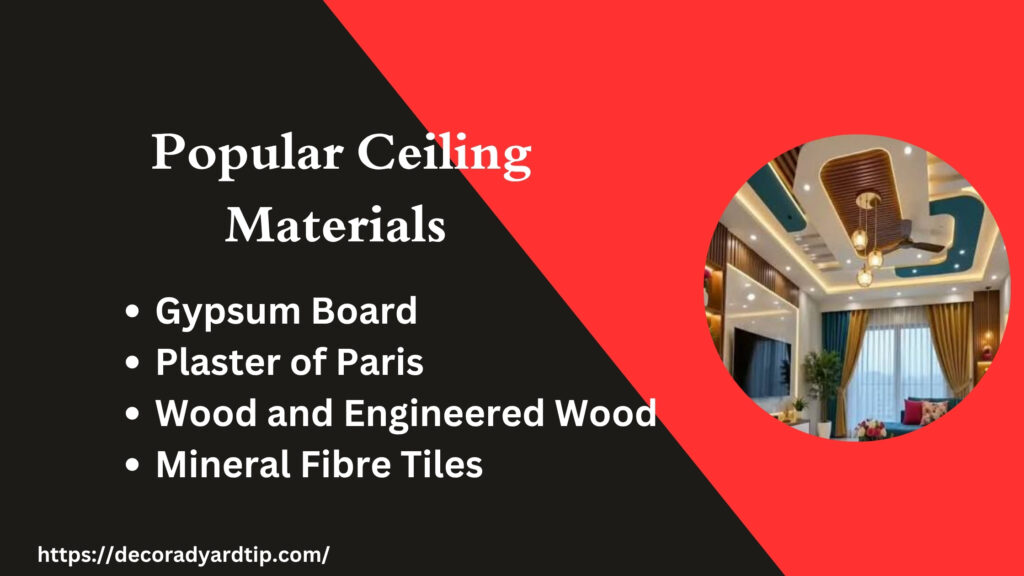
Gypsum Board
Gypsum board is one of the most popular ceiling materials because it provides a smooth, clean surface. It is good for sunken borders, floating shapes, layered designs, curves and integrated lighting.
It’s quite light and you can paint in different hues. Gypsum boards are not ideal for damp areas unless they are of a moisture-resistant type.
Plaster of Paris
Plaster of Paris or POP is used for intricate mouldings and bespoke shapes. It can be used to make beautiful borders, floral designs, medallions and continuous curving forms.
POP gives a lot of latitude in design but the quality of the installation is very dependent on good workmanship. Cracks might develop over time because to poor mixing or application.
Wood and Engineered Wood
Natural warmth and texture is brought by wooden ceiling elements. Beams, slatted surfaces or selected highlight parts can be constructed from solid wood, plywood, veneers or engineered panels.
Wood is very beautiful in living rooms, dining rooms, workplaces and bedrooms. It needs to be carefully handled to preserve it from moisture, termites and temperature changes.
PVC Panels
PVC panels are lightweight, cost effective and easy to maintain. They are resistant to moisture and so ideal for use in kitchens, baths, patios and utility areas.
They come in basic hues, wood-effect finishes and ornate designs. The quality, though, varies, and you’ll normally get a more sophisticated look going with the thicker, better-finished panels.
Metal Ceilings
Aluminium and steel ceiling systems are durable, fire-resistant, and easy to clean. They’re frequently used in offices and commercial interiors, although perforated metal panels can also create a bold industrial look in modern homes.
Mineral Fibre Tiles
Mineral fibre tiles can improve sound absorption, making them suitable for home offices, entertainment rooms, and commercial spaces. They’re usually installed within a suspended grid, allowing easy access to cables and services above the ceiling.
False Ceiling Designs for Small Homes
The best fake ceiling designs for tiny homes provide intrigue without making rooms appear lower or cluttered. Heavy moldings, deep layers and dark colors can make a small space feel constricted.
Often a low peripheral border is all that is needed to provide concealed illumination while maintaining a central height. Light colours, slender profiles and simple geometric shapes help to keep an open feel.
If you have a small bedroom, go for a slim floating frame over the bed. A single recessed rectangle in a tiny living room visually organises the seating space. You can also help create a sense of continuity within the decor by carrying the same ceiling feature into other sections.
Cove Lighting False Ceiling Ideas
A fake ceiling with cove lighting hides the light source in a disguised ledge. It bounces light off the ceiling or neighboring walls, providing a warm, indirect glow free of visible bulbs.
A warm-white cove light can add a cozy and inviting atmosphere to a bedroom or living room. Neutral white light works well for modern settings, and colour shifting strips should be used sparingly to prevent making the room feel too theatrical.
The final result depends on the depth and location of the cove. If it’s too thin or badly positioned, the light can create uneven spots. Verify recess dimensions with lighting supplier and ceiling installer prior to construction.
Using LED Spotlights Effectively
LED spotlights give directed light at particular locations or objects. They can bring emphasis to a piece of art, light up a kitchen counter, provide illumination for a reading nook or emphasize a textured wall.
Avoid placing spotlights in a tight, inflexible grid unless the room actually needs that much task lighting. Instead, put them where they’d be in regular life and furniture placement. Spotlights are more effective when used with pendants, wall lights and hidden lighting for a more pleasant layered feel.
Pick your beam angle wisely. A narrow beam creates a focused spotlight, whereas a larger beam distributes the light throughout the space in a more even manner.
Curved Ceiling Design
A curved ceiling design introduces movement and softness into a room dominated by straight walls and rectangular furniture. Curves may appear as waves, circular recesses, rounded borders, or flowing transitions between ceiling levels.
This style works particularly well above dining tables, seating zones, beds, and reception areas. Curves can also guide the eye through an open-plan interior.
Keep the shape connected to another feature in the room. A circular ceiling detail, for example, may echo a round dining table or curved sofa. Unrelated curves can feel decorative for decoration’s sake.
Coffered Ceiling
Coffered ceiling: A grid of repeating sunken or elevated panels. Traditional variants are frequently deep oak beams, while modern interpretations use sleek gypsum profiles, plain squares and integrated lights.
The architectural feature adds flair and can lend a more sophisticated sense to a spacious living room, dining room or study. It may also aid with the organisation of lighting and the enhancement of acoustics.
Coffers tend to work better in larger rooms with higher ceilings as it reduces the height of the ceiling. For a smaller space, go for shallow portions and the same light colour scheme.
Decorative Ceiling Panels
Decorative ceiling panels offer a practical way to add pattern, texture, or visual contrast. Options include carved wood, geometric gypsum, embossed PVC, acoustic felt, perforated metal, and lightweight three-dimensional panels.
You don’t need to cover the entire ceiling. A panelled section above a dining table, kitchen island, or bed can serve as a strong focal point. Repeating the panel material elsewhere—such as on a feature wall or cabinet front—helps create a cohesive interior.
Consider cleaning and maintenance before choosing highly textured surfaces. Intricate patterns can collect dust more easily than smooth panels.
Latest False Ceiling Trends
The current false ceiling ideas are sleeker designs, warmer materials and lighting that feels integrated, rather than added later. The biggest trend is personalization. A ceiling should reflect the proportions and purpose of a room, rather than mimicking a standard catalogue design.
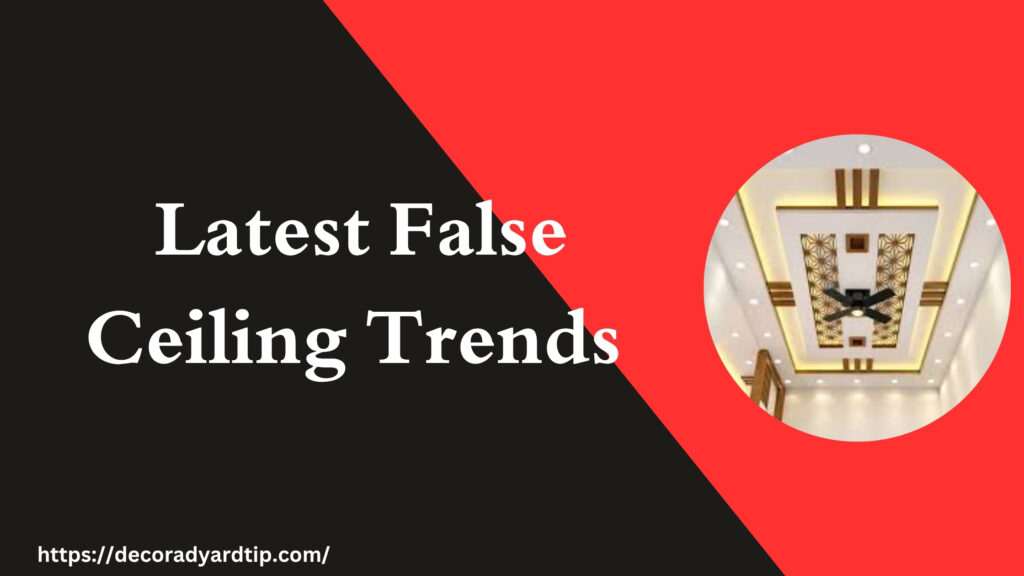
Homeowners are shifting away from overly elaborate multi-coloured decorations towards basic architectural features.
General directions:
- minimal floating ceilings with soft hidden lights
- Soft curves and graceful transitions between spaces
- Acoustic materials in combination with wooden slats
- Heavy layering versus shallow geometric recesses
- Matte finishes in soft white, beige and earthy tones
- Spotlights without trim, LED linear channels
- Whole-room coverage replaced with selected ceiling areas
- Energy saving lighting with dimming controls;
Planning Lighting in a False Ceiling
The lighting should be planned before the ceiling framework is put in place. First, determine where people will sit, work, walk, cook, read or exhibit ornamental items.
Use three layers of lighting where applicable. General lighting to provide overall visibility, task lighting to aid specific operations, and accent lighting to create ambiance or visual emphasis. A living room might include a pendant in the middle, cove lighting around the edges and adjustable spotlights.
Use individual switches or dimmers for each layer. This means you can modify the ambiance without turning on every fixture at once.
Important Factors Before Installation
Before finalising a design, measure the room and determine how much ceiling height can be sacrificed. A false ceiling that looks balanced in a showroom may feel oppressive in a lower home.
Also consider:
- Access points for electrical and air-conditioning maintenance
- Moisture resistance in kitchens and bathrooms
- The weight of pendants, fans, and chandeliers
- Ventilation around LED drivers and transformers
- Fire safety and material quality
- Future bulb or fixture replacement
- Furniture placement and room layout
Heavy fixtures should be supported by the structural ceiling rather than relying only on the false-ceiling panels.
Common False Ceiling Mistakes
A common mistake is to pick an extravagant design that doesn’t consider the size of the room. Another is putting too many lights, which wastes electricity and causes unpleasant glare.
Poorly designed service access can result in costly future repairs. The space can also look inconsistent with inconsistent colour temperatures, for example warm cove lighting with harsh cool-white spotlights.
The ceiling must support the inside, not overpower it. A basic design with lighting placed just so frequently looks more sophisticated than a convoluted pattern.
False Ceiling Designs: Decoradyard Tip
Decoradyard Tip is dedicated to helping homeowners create attractive, functional, and inspiring interiors with everyday home improvement and décor ideas. We aim to give you expert advice and easy-to-follow content so you can make confident design choices when you are seeking for a False Ceiling Design, or a complete Home Ceiling Design, or looking for the best Home Ceiling Lights to illuminate your room. Besides producing great home décor articles, we also provide expert Guest Posting and Content Writing services for businesses, bloggers and brands who want to get original, SEO-friendly content that will increase online visibility, develop authority and engage readers.
Learn more about our mission and the team that produces our material on our About Us page. For any queries, partnership opportunities or if you wish to discuss our Guest Posting or Content Writing services, please visit our Contact Us page. We’re here at Decoradyard Tip to help you change any space with timeless design inspiration, practical ideas and expert home renovation advice.
Conclusion
False ceilings can increase lighting, hide services and add architectural interest to a plain room. The correct solution relies on the height of the ceiling, the size of the room, the upkeep, the budget and the feeling you want to create. Whether it is minimalist cove lighting, false ceiling, attractive curved feature, structured coffered ceiling or ornamental panels, do keep in mind proportion and function. Then the ceiling is no longer an afterthought but part of the room when materials, design and lighting are in harmony.
FAQs
What is the best material for a false ceiling?
Popular materials are Gypsum, POP (Plaster of Paris), Wood, PVC, Metal, Mineral fiber. The ideal decision relies on your budget, the type of room, maintenance needs and interior design style.
What is False Ceiling?
A false ceiling is sometimes called a dropped or suspended ceiling. It is a secondary ceiling below the primary ceiling. It is used to improve aesthetics, hide wiring and ductwork, improve lighting and give greater insulation.
Does false ceiling reduce room height?
Yes, a false ceiling does reduce the height of the ceiling a bit as it is fixed below the original ceiling. However, intelligent design and adequate lighting can make the room seem more expansive.