

The dining area is not just a space to eat; it’s a space to chat, celebrate, and share moments of everyday life. The right dining table shape can help dictate natural conversation, and great lighting can set the tone and create a more inviting space. These elements can also help make rental homes more appealing, as they can create a sense of community and a welcoming environment. Many professionals in the San Antonio property management field understand that a good, appealing dining room can enhance the overall value of a rental apartment, especially when the room’s dimensions, traffic flow, and lighting complement each other.
5 Ways to Create a Dining Space Designed for Connection
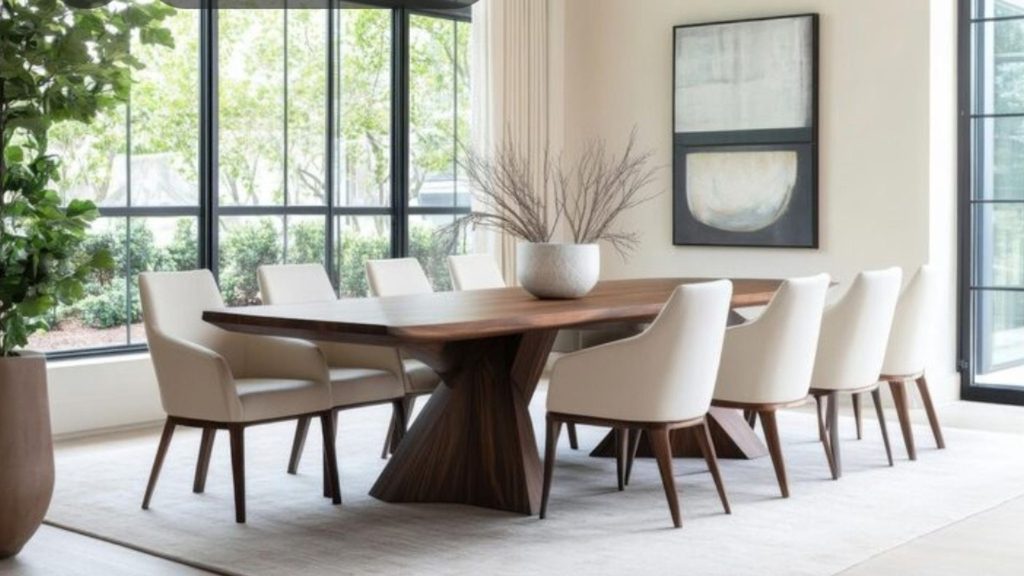
Source: Freepik
- Match the Table Shape to the Room and Social Dynamic
Experts in Oakland property management often recommend choosing dining furniture based on room proportions and everyday functionality, since a well-planned dining area can improve both tenant experience and a property’s overall rental appeal.
Round tables work well for discussion, as each individual is the same distance from the center and in a close-knit group. They also remove sharp corners and may help make small dining spaces easier to maneuver.
Rectangular tables are ideal for longer rooms and can accommodate larger meetings, and oval tables offer a rectangular length with rounded corners. In rooms with proportionally shaped spaces, square tables will help create a balance, especially if 4 people are seated at the table.
Did you know?
Oakland’s average rent across all bedrooms and property types is approximately $2,395 per month as of August 2026.
- Consider Seating Capacity Without Overcrowding
Chairs are pushed together so tightly at a beautiful dining table that there is no room to sit around the table and enjoy the meal. Leave enough space around the table for guests to sit comfortably, move their chairs, and move around without disrupting conversations.
Base table dimensions on the number of people likely to use it. Tables with 4 seats may be appropriate for apartments, or tables that can be extended are good for occasional gatherings that don’t require much floor space every day.
Bench seating can also make full use of space on one side while creating a relaxed, informal feel. The main consideration is adequate clearance around the area for easy traffic flow from the dining area to the kitchen and living room.
- Select Lighting That Defines the Dining Zone
Lighting can be used to create a focal point in a dining area. A pendant fixture hanging above the table offers both practical and aesthetic illumination, particularly when the dining and living areas are within one large room, typical of open-plan properties.
Linear pendant fixtures or a number of smaller pendants may provide more uniform lighting at rectangular tables. A round pendant is frequently the perfect complement to round tables.
Warm white lights will give a more intimate feel to the room; dimmable lights will give versatility from a casual breakfast to an evening gathering. The fixture should also be suitable for the table, so it’s not too big or too small.
Did you know?
San Antonio’s average rent across all bedrooms and property types is currently about $1,600 per month.
- Coordinate Materials, Colors, and Lighting Finishes
Matching all the elements in a cohesive dining area is not necessarily essential. Rather, complementary materials and finishes can help establish visual harmony. With its wooden surface, a wooden table can complement upholstered chairs, woven textures, metal accents, and ceramic accessories, ensuring a coherent look.
Lighting fixtures can complement the finishes. For instance, a matte black fixture can match cabinet hardware or window frames, and a brass pendant can work with black cabinet hardware.
It also brings a sense of color harmony to the dining space, which can enhance the overall aesthetic of the home. Using a single or double tone in chairs, artwork, rugs, or lighting can create a sense of intentional design throughout an open-plan interior to avoid a disjointed look.
- Create an Atmosphere That Encourages Conversation
Atmosphere is as significant to the selection of furniture as it is to the purpose of the space being entertaining; the purpose of an entertaining space is that of connection. Set up the tables so they promote interaction between people, and don’t have people standing back to a wall or facing into an empty corner.
A piece of art, plants, candles, and accessories can make it cozy in the dining area, and a central rug can visually ground the space. In open areas, larger than the standard office, curtains, upholstered chairs, rugs, and other soft furnishings can be used to help dampen excessive echoes, leading to a more comfortable environment.
Keep the lighting flattering and comforting, and avoid too much light. Layering with lights can be done through the use of dimmers, secondary accent lighting, and thoughtful lamp placement to accommodate various types of events.
End Point
The right table shape, comfortable proportions, functional seating and lighting, purposeful materials and atmosphere combine to create the perfect dining environment. Round and oval tables foster a sense of intimacy; rectangular tables can seat more people; and flexible furniture can be rearranged for various activities. This is then finished with appropriately scaled and layered lighting. These selections create a cozy, inviting communal environment for gathering, celebrating, and making connections that can be enjoyed at the dining table.