

The coffee table is probably the most used piece of furniture in your home but it is often neglected. It cradles your morning coffee, your remote control, your favorite novels, and perhaps your feet after a long day. It does more than that. It brings the complete living room together. In this guide, we’ll take you through every design and feature worth understanding before you buy, so that you can choose a table that fits your space, your budget, and the way you actually live.
Why the Right Coffee Table Matters More Than You Think
The coffee table is nearly the last piece of furniture to be selected for most people, an afterthought after the sofa and rug are in place. That’s not right. There’s a coffee table in the middle of the room, both visually and practically, which means it has a bigger impact on the overall look of your living room than nearly any other piece.
The appropriate table ties a space together. Too huge, too small, or just the incorrect shape, the wrong one may make a gorgeous space feel odd. Think of three things before you shop. How much room do you really have? How to utilize the table day by day: And what style is currently in the room so your new table enhances it rather than fights it.
Small Coffee Table Options for Tight Spaces
If you live in a smaller apartment or have a compact seating area, a small coffee table is often the smartest choice. These tables give you a surface for drinks and books without overwhelming the room or blocking walking paths.
A small coffee table works especially well paired with a loveseat or a single sofa, where a bulky table would eat up too much floor space. Look for one with slim legs and an open base, since this creates the feeling of more room even when the footprint is small. Many small tables also come with a lower shelf, giving you extra storage without adding visual bulk.
Coffee Table For Apartment Living
Choosing a coffee table for apartment living comes with its own set of challenges. Space is usually limited, foot traffic patterns matter more, and many apartments need furniture that can adapt to more than one purpose.
For apartment living, look for tables that are lightweight and easy to move, since apartment layouts often change as you rearrange furniture or move between units. Round and square shapes tend to work better in smaller apartments than long rectangular tables, since they allow more flexible pathways around the seating area. A table with hidden storage is also a great fit for apartment living, since it lets you tuck away magazines, chargers, or blankets without needing extra furniture.
Large Coffee Table for Bigger Living Rooms
At the opposite end of the scale, a huge coffee table is the appropriate pick for spacious living spaces with sectional sofas or various seating pieces. A table that is too small can look misplaced in a vast space, as if it is floating and has no connection to the furniture surrounding it.
Keep proportion in mind when selecting a large coffee table. As a general rule of thumb, the table should be around two-thirds the length of your sofa, and close enough for people to comfortably reach it, usually within fourteen to eighteen inches of the seats. Big tables also let you layer in trays, books and decor. It’s a simple technique to make a big living room feel a little more finished.
Round Coffee Table and Square Coffee Table Shapes
Shape matters more than most shoppers realize. A round coffee table softens a room, especially when straight lines dominate from sofas, shelves and rugs. A practical advantage also exists for round tables. There are no sharp corners, so they are safer for houses with little kids or lots of foot traffic.
A square coffee table, however, creates a clean, balanced image, especially when set in front of a square or boxy sectional. Square tables perform effectively in a room with a symmetrical layout, when you want order and structure, not softness.
Rectangular Coffee Table for Long Sofas
A rectangular coffee table remains the most common choice, and for good reason. It matches the shape of most standard sofas, making it easy to center in front of your seating without leftover empty space on either side.
Rectangular tables are also the most practical for everyday use, since the longer surface gives you more room to spread out drinks, plates, and decor during gatherings. If your living room follows a long, narrow layout, a rectangular coffee table will almost always look more natural than a round or square alternative.
Glass Coffee Table for a Light, Open Feel
A glass coffee table is one of the easiest ways to make a room feel more open. Because you can see through the surface, glass tables take up visual space without taking up perceived space, which is especially useful in smaller rooms or spaces with a lot of furniture already.
Glass also pairs well with almost any style, from modern to traditional, since the material itself feels neutral. The one tradeoff to keep in mind is maintenance. Glass tops show fingerprints and dust more easily than wood or metal, so they need more frequent wiping down to stay looking sharp.
Metal Coffee Table and Brass Coffee Table Accents
For a more industrial or elevated look, a metal coffee table brings texture and durability that wood alone cannot match. Metal frames tend to be slimmer than wood, which makes them a great option when you want a table that feels light and airy despite being sturdy.
A brass coffee table specifically has become a popular choice for adding warmth to a room, since brass carries a soft, golden tone that pairs beautifully with neutral sofas and natural textures like linen or wool. Brass accents also age well, developing a gentle patina over time that many homeowners actually prefer over a brand new shine.
Beige Coffee Table and Two Tone Coffee Table Finishes
Color and finish matter just as much as shape and material. A beige coffee table has grown in popularity because it blends easily into almost any color palette, from warm earth tones to cooler neutrals. Beige tables tend to feel calm and grounded, making them a safe and versatile pick if you are not sure what your room’s final look will be.
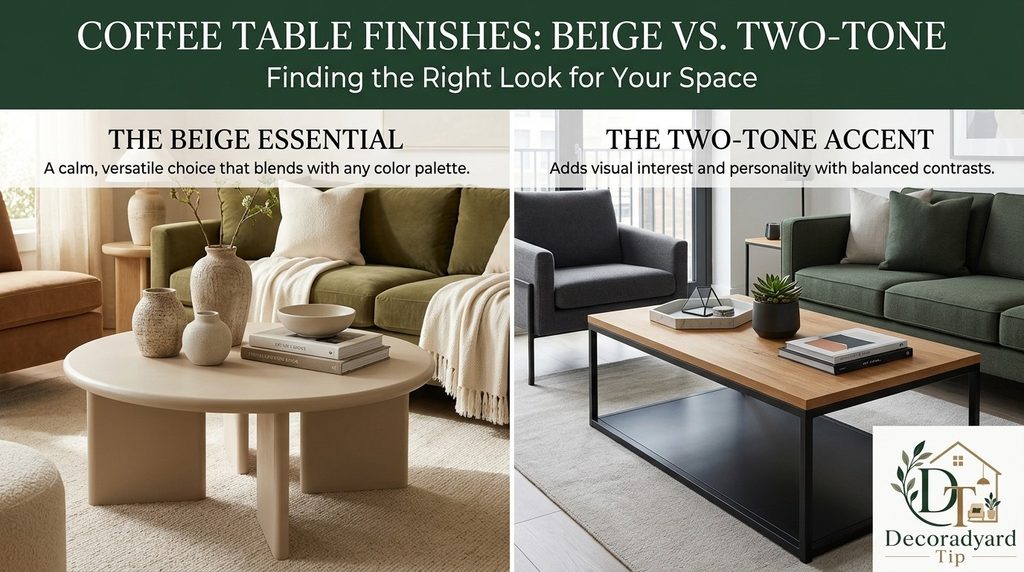
A two tone coffee table offers a bit more personality without going overboard. These tables typically combine two different materials or colors, such as a wood top paired with a black metal base, or a light frame with a darker tabletop. This approach adds visual interest while still keeping the overall look balanced and intentional.
Coffee Table With Shelves, Drawers, and Storage
If your living space tends to accumulate clutter, function should be as important as style. Coffee tables with shelves offer an open place for displaying books, baskets or decor while keeping everyday necessities within easy reach. A storage coffee table takes things a step further, featuring enclosed parts to hide remotes, chargers or game controllers. And for those who like a tidier overall look, a coffee table with drawers is the most unobtrusive way to store things, allowing you to entirely hide away your items with a single pull.
Lift Top Coffee Table for Work and Dining
Lift top coffee tables have been especially popular for folks who work from home or eat casually in the living room. The table lifts up and typically glides forward, so it’s a comfortable height to use a laptop or enjoy a meal without having to travel to another room. It’s a smart solution for smaller houses without a separate home office or dedicated eating area, as one piece of furniture can be used for two quite different purposes during the day.
Nesting Coffee Tables for Flexible Layouts
Nesting coffee tables are the perfect answer for anyone who desires versatility without compromising on design. Instead of one enormous table, you have two or three tables of various sizes that fit nicely on or off to the side of each other. This is especially handy for entertaining when you want to pull the smaller tables out to add some extra surface space when you’ve got visitors, but then tuck them back together to make things look a little cleaner when you’re using the tables day to day. Nesting tables are also good for tiny rooms because they have the versatility of a bigger table but not the permanent size of one.
Coffee Table for Bedroom Spaces
Although coffee tables are most commonly used in the living room, using a coffee table in the bedroom is becoming more popular, especially in bigger bedrooms with a reading corner or lounging area. A tiny or round coffee table works particularly well, allowing space for a book, a cup of tea or a candle without competing with a nightstand.
Decoradyard Tip: Coffee Table Ideas
We are at Decoradyard Tip to give you inspiring home decor ideas, fashionable coffee table ideas and practical tips to help you turn your living space into a beautiful and comfortable home. Our site inspires readers to find new methods to upgrade their interiors, from contemporary furniture designs to space-saving solutions such as a foldable sofa. We also offer professional guest posting and content writing services for companies, bloggers and businesses who wish to share excellent material with our audience. If you’re passionate about home décor and want to contribute, check out our Write For Us page for guest post options. To collaborate, request content or publication possibilities, Contact Us and connect with Decoradyard Tip.
Final Thoughts
Modern coffee tables often have clean lines and basic designs, and are often made from a combination of materials such as wood, metal and glass. If your home already has a modern vibe, picking a table that fits this style will help the entire space feel more integrated.
The greatest coffee table for living room spaces at the end of the day is one that fits your actual life, not simply a photo you saw online. Think about your area, how you utilize the room and what elements whether it be storage, form or finish will make your daily routine just a little bit easier. It may seem like a little choice, a coffee table, but it’s one you’ll notice every single day.