
A balcony is one of the tiniest areas in a home, yet it does a surprising amount of work. It lends a frame to the view, sets the aspect of the front of the house from the street and offers a peaceful place to have morning coffee or wind down in the evening. The handrail that runs around it is more important than most people realize. Replace frigid steel with warm timber and the whole place instantly feels softer, calmer, more in touch with nature.
Whether you’re planning a new build or renewing a worn balcony, these wooden balcony balustrade ideas can help you discover a style that complements your home, your budget and the way you really use the space. We’ll go through popular designs, the best timbers to choose, safety essentials and simple care habits that will keep wood looking beautiful for years.
Wooden Balcony Balustrade: Decoradyard Tip
At Decoradyard Tip, we inspire homeowners with creative ideas, practical tips, and expert guidance to transform their living spaces into beautiful and functional environments. Whether you’re exploring elegant Wooden Balcony Balustrade designs, looking for stylish Dark Kitchen Cabinets, or searching for modern home décor and renovation inspiration, our goal is to provide valuable, easy-to-follow content that helps you make informed design decisions. In addition to sharing home improvement and interior design inspiration, we offer professional Guest Posting and Content Writing services for businesses, bloggers, and brands.
To learn more about our mission, expertise, and the team behind our content, visit our About Us page. If you’re interested in contributing articles, exploring collaboration opportunities, or learning more about our writing services, visit our Write For Us page. For general questions, business inquiries, or partnerships, feel free to reach out through our Contact Us page.
Why Wood Still Wins on the Balcony
Metal and glass are all well and good but wood has something that they don’t: texture and warmth. A natural wood balcony railing will age gracefully, will take on the colour of the evening light and will feel good under your touch even on a frigid morning. It works well with plants, outdoor furniture and stone or brick facades.
wood is also wonderfully pliable. A carpenter can cut wood, shape it, stain or paint it to suit just about any appearance, from cottage charm to sleek minimalism. It’s such versatility that means architects often still rely on timber for balconies they want to feel welcoming, rather than just functional.
Popular Wooden Balcony Balustrade Designs
There is no one “right” look. The ideal wooden balcony railing design is the one that matches the style of your building and the view you wish to preserve or reveal. These are the most requested styles by homeowners.
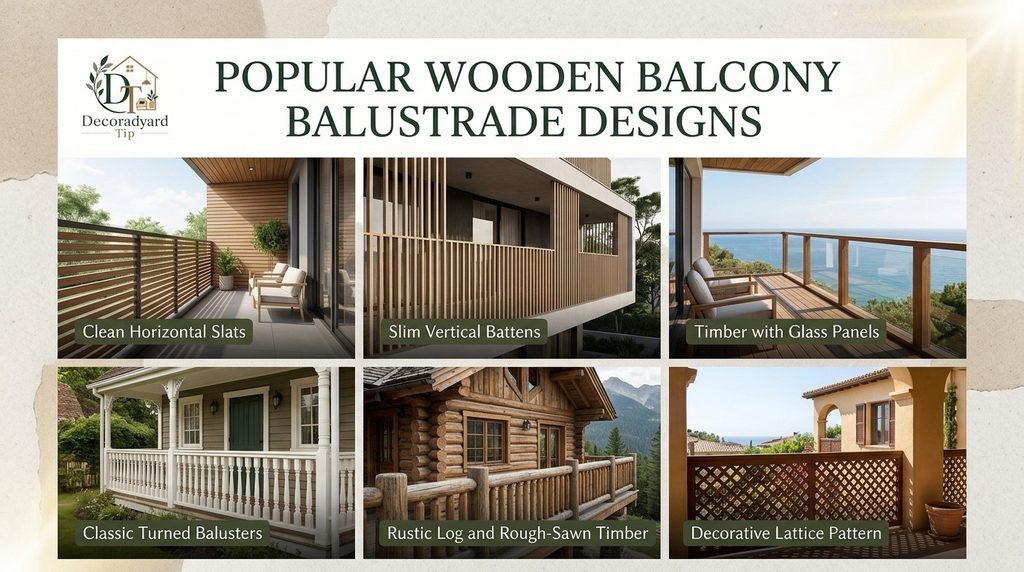
Clean Horizontal Slats
Horizontal boards with uniform gaps characterise a modern wooden balcony railing. They pull the eye sideways, making small balconies seem broader. They look great with flat roofs, render and large windows. This form reappears in modern balcony architecture because it looks clean without being clinical.
One word of caution: in some areas, horizontal slats are a no-no on high balconies, since kids can climb them like a ladder. Check your local regulations before you commit.
Vertical Battens
Slim vertical battens give a tall, tailored look and are naturally harder to climb. Spacing them closely creates privacy, while wider gaps keep the view open. Many timber balcony balustrade projects use vertical battens with a chunky top rail for a clean, architectural finish.
Wooden Balcony Railing with Glass Panels
If you have a view you want to show off, a wooden balcony railing with glass panels gives you the best of all worlds. Toughened glass infill is framed by timber pillars with a strong wooden top rail, giving you warmth at the edges and an uninterrupted sight in the middle. It works especially effectively in apartments facing the sea, homes perched on hillsides and city flats where the skyline is the focus.
Classic Turned Balusters
Traditional wooden balcony railing ideas for period homes, cottages and farmhouses frequently start with twisted balusters. These spherical spindles, turned on a lathe, have been used for generations, and seem lovely even now. They are white painted and complement Victorian and colonial styles. They are available in natural oak or teak and they seem richer and more grounded.
Rustic Log and Rough-Sawn Timber
Rustic balcony railing designs make the most of the raw character of wood. Picture peeling log poles, roughly sawn boards, evident knots and hefty workmanship. This design is great for mountain cottages, lake houses and country getaways where the building should feel like a part of the landscape rather than resting on top of it.
Decorative Patterns and Lattice
Decorative wooden balcony railing designs provide the railing its unique characteristic quality. The architecture of the Mediterranean, the Middle East and Asia often use criss-cross lattice, cut-out motifs, geometric frames and carved panels. Pierced patterns allow air and dappled light to filter through but still provide some privacy which is great for balconies that look onto neighbours.
Luxury Wooden Balcony Balustrade Designs
At the top end luxury wooden balcony balustrade designs are all about premium timber and faultless craftsmanship. Look for wide, hand-finished handrails of teak or ipe, with hidden fittings and stainless steel or bronze accents, and integrated LED strips buried under the top rail. These railings are strong and quiet underfoot and are designed to last decades with proper upkeep.
Choosing a Wooden Balcony Balustrade for Modern Houses
Modern homes tend to have strong lines, large openings and a restrained palette. To keep timber looking current rather than old-fashioned, try these tips:
- Keep the profile simple. Square or rectangular sections look more modern than ornate shapes.
- Mix materials. Timber with black steel posts or frameless glass instantly feels contemporary.
- Pick one tone. Use a single stain colour across the railing, decking and cladding for a calm, unified look.
- Let the grain show. Clear oils or light grey finishes highlight the texture without hiding it under thick paint.
These small decisions are often the difference between a railing that looks bolted on and one that feels designed with the house.
Getting the Wooden Balcony Handrail Right
The handrail is the section of the railing you touch every day and deserves a little more care. A good wooden balcony railing should be easy to hold, smooth enough not to give splinters and shaped to shed rainfall, not to hold it. Rounded or slightly slanted tops dry faster and last longer than level tops.
Hardwoods such as oak, iroko and teak make good railings as they wear smoothly over time. If you’re using a softer timber elsewhere, changing simply the handrail to a hardwood is a cheap approach to raise the overall quality.
Balcony Safety Railing Essentials
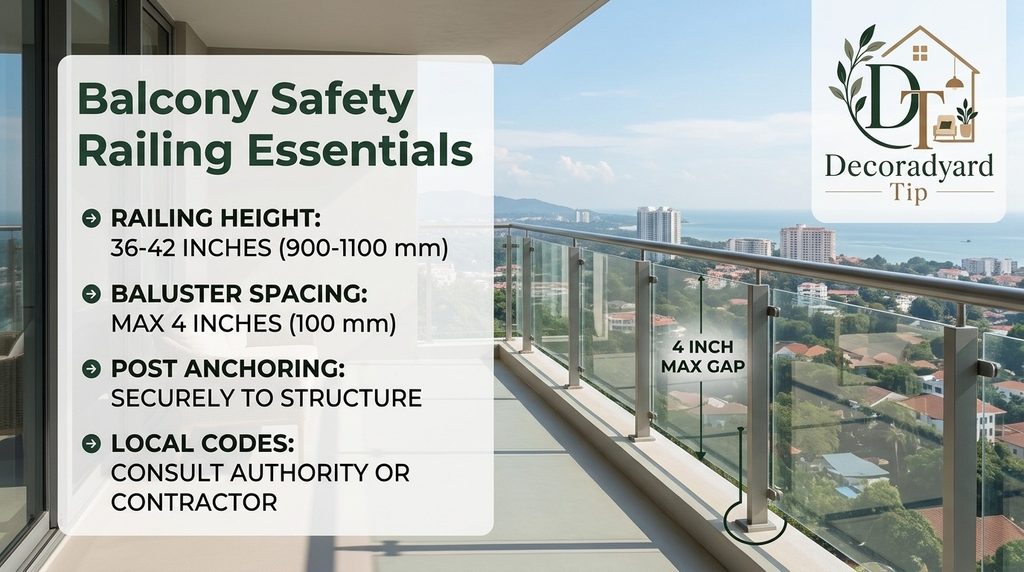
A beautiful railing is useless if it is not safe. Every balcony safety railing must be strong enough to resist people leaning or falling against it, and building codes in most countries set clear minimums. As a general guide:
- Railings are typically required to be between 36 and 42 inches (around 900 to 1,100 mm) high, depending on the location and height of the balcony.
- Gaps between balusters or slats are usually limited to about 4 inches (100 mm) so a small child cannot slip through.
- Posts must be securely anchored to the structure, not just screwed into the surface of the decking.
Always confirm the exact requirements with your local building authority or a qualified contractor. Rules vary, and getting it wrong can mean costly rework or, worse, an accident.
Blending Your Railing with Outdoor Balcony Design Ideas
Your railing should work with the rest of the space, not compete with it. Some simple outdoor balcony design ideas to pair with an outdoor wooden balustrade:
- Hang planter boxes over the top rail for herbs or trailing flowers.
- Add a slim fold-down bar shelf for drinks and laptops.
- Weave warm string lights between posts for soft evening lighting.
- Match the timber tone to your outdoor chairs or a small side table.
- Use outdoor rugs and cushions to balance the hard lines of the railing.
The goal is a balcony that feels like an extra room, not just a ledge with a fence around it.
Final Thoughts
A balcony can be transformed with the addition of a timber railing. Whether you choose crisp modern slats, graceful turned spindles, rugged rustic timber or a sleek blend of wood and glass, there is a style that will provide warmth and character to your outdoor area. Use the correct wood, follow the safety standards, and give it a little care each year. Do this and your balcony will be natural and exquisite for many seasons to come.
Want more wooden balcony railing ideas? Save this guide, draw a few alternatives against a picture of your property, then talk to a local carpenter about what will work best for your area.
Frequently Asked Questions
Which wood is best for a balcony balustrade?
The best choices are dense, naturally durable hardwoods such as teak, ipe and iroko that withstand rot, insects and weather with no treatment. Western red cedar and larch are lighter, more economical and have good natural durability. Good grade pressure treated pine and modified woods like Accoya are especially popular for the price conscious project that nevertheless needs to last.
How do you maintain a wooden balcony railing?
Two or three times a year, clean the railing with a soft brush and mild soapy water to eliminate dirt and algae. Check for loose fixings, cracks or soft spots, particularly at the base of posts. Reapply a coat of oil or stain with UV protection every 1-2 years or as soon as water stops beading up on the surface. Catching little faults early is far cheaper than replacing boards later.
Are wooden balcony balustrades durable?
Yes, if you use the suitable lumber and the railing is properly erected and maintained. A good hardwood railing will endure 25 years or more. Durability diminishes quickly if let to sit in joints or on flat surfaces thus proper details and regular sealing make a great difference.