

A well designed wardrobe is not just a place to put clothing. It also helps to organize the bedroom, conserve space, and eliminate clutter and add style to the room. Modern wardrobe designs can be adjusted according to the room size, storage requirements and interior concept, from a compact space sliding wardrobe to a sumptuous walk-in closet.
Your perfect wardrobe will be dictated by a range of elements such as space, type of door, material, internal layout, budget and personal preferences. In this tutorial we look at popular wardrobe styles, practical storage features and beneficial wardrobe planning suggestions to help you create a beautiful and well organized bedroom.
Why Wardrobe Design Matters
Wardrobes are among the largest pieces of furniture in a bedroom, so their design has a strong influence on the overall appearance of the space. A thoughtfully planned wardrobe helps you:
- Organize clothes, shoes, accessories, and personal belongings.
- Use the available wall and floor space efficiently.
- Maintain a clean and clutter-free bedroom.
- Improve the visual appeal of the interior.
- Create dedicated storage sections for different items.
- Reduce the time spent searching for clothes and accessories.
Modern wardrobes combine attractive finishes with practical features such as shelves, drawers, hanging sections, mirrors, lighting, and loft storage.
Popular Modern Wardrobe Designs
1. Hinged Door Wardrobes
Hinged door wardrobes are one of the most classic and adaptable wardrobe choices. Their doors are hinged to the wardrobe frame and open outwards.
These closets provide you full access to the inside storage space, making it easier to see and organize garments. The inside of the doors can also be used for mirrors, hooks, tie holders or small accessory organizers
Hinged wardrobes are especially suited to medium and big bedrooms where there is adequate space for the doors to open easily.
Advantages of Hinged Door Wardrobes
- Full access to the wardrobe interior.
- Easy to install, repair, and maintain.
- Suitable for different interior styles.
- Internal door surfaces can provide extra storage.
- Available in single-door, double-door, and multi-door formats.
They may not be the best choice for very compact bedrooms because the doors require additional opening space.
2. Sliding Door Wardrobes
Wardrobes with sliding doors are prevalent in modern bedrooms. The doors slide open horizontally along tracks, rather than swinging wide outward.
This design is space saving and gives sleek contemporary styling. Sliding wardrobes are especially ideal for bedrooms where the wardrobe is located close to a bed, dressing table or other furniture. The doors can be completed in wood, glass, mirrors, laminates, acrylic panels or a combination of materials.
Advantages of Sliding Door Wardrobes
- Do not require additional door-opening space.
- Ideal for compact and modern bedrooms.
- Provide a sleek and streamlined appearance.
- Can accommodate wide wardrobe sections.
- Mirrored sliding doors can make the room appear larger.
Because only one section of the wardrobe is generally accessible at a time, the internal layout should be planned carefully.
3. Walk-In Wardrobes
Walk-in wardrobes provide a luxurious and highly organized storage solution. They usually occupy a separate room, alcove, or dedicated section connected to the bedroom.
A walk-in wardrobe can include hanging rails, open shelves, drawers, shoe racks, dressing mirrors, accessory trays, seating, and integrated lighting. It allows homeowners to view and organize their entire collection in one place.
Walk-in wardrobes are best suited to spacious bedrooms or homes with an additional dressing area.
Advantages of Walk-In Wardrobes
- Provide generous storage capacity.
- Create separate sections for clothes, shoes, bags, and accessories.
- Offer a premium dressing experience.
- Can be customized according to individual requirements.
- Help keep the main bedroom neat and uncluttered.
Proper lighting and ventilation are important when planning a walk-in wardrobe.
Difference Between Hinged, Sliding, and Walk-In Wardrobes
| Feature | Hinged Door Wardrobes | Sliding Door Wardrobes | Walk-In Wardrobes |
| Door mechanism | Doors open outward using hinges | Doors slide horizontally on tracks | Usually open-plan or fitted with an entry door |
| Space requirement | Requires clearance in front | Saves floor space | Requires a separate or dedicated area |
| Best suited for | Medium and large bedrooms | Small and medium bedrooms | Large bedrooms and luxury homes |
| Interior access | Full wardrobe access | One section at a time | Complete access to all storage sections |
| Storage capacity | Moderate to high | Moderate to high | Very high |
| Design style | Traditional, classic, or modern | Sleek and contemporary | Premium and luxurious |
| Maintenance | Simple hinges are easy to maintain | Tracks require occasional cleaning | Depends on the fittings and accessories |
| Customization | Highly customizable | Customizable, especially for wide walls | Fully customizable |
| Approximate cost level | Low to medium | Medium to high | High |
| Main advantage | Complete visibility and access | Space-saving door system | Maximum storage and organization |
The Timeless Appeal of a Wood Wardrobe
A wood wardrobe gives warmth, texture and elegance to a bedroom. Depending on the finish and style, it can compliment traditional, rustic, Scandinavian, contemporary or luxury settings.
Solid wood closets are sturdy and long-lasting while engineered wood wardrobes are a more inexpensive and adaptable option. Popular finishes are oak, walnut, teak, ash and dark wood tones.
A modern wood wardrobe may feature:
- Fluted or grooved panels.
- Minimal handles.
- Push-to-open doors.
- Matte or polished finishes.
- Mirrored sections.
- Glass shutters.
- Built-in drawers and shelves.
- Contrasting laminate panels.
For a lighter-looking bedroom, choose pale wood shades or combine wood with white, beige, or glass finishes. Dark wood wardrobes can create a bold and luxurious appearance in larger rooms.
Practical Wardrobe Designs with Shelves
Well-planned closet designs with shelves help arrange folded clothes, handbags, blankets, boxes, and accessories.
Instead of using merely hanging rails, you can divide the internal area according to the objects you have. Wardrobe shelves are particularly beneficial since you may vary their height when your storage needs change.
A functional wardrobe may include:
- Upper shelves for seasonal clothes and luggage.
- Eye-level shelves for frequently used items.
- Deep shelves for blankets and bedding.
- Narrow shelves for handbags.
- Pull-out shelves for accessories.
- Open shelves for display items.
- Separate shoe shelves at the bottom.
- Lockable shelves or drawers for valuable belongings.
Avoid making shelves excessively deep, as items stored at the back may become difficult to reach. Shelf dimensions should be planned according to the type of clothing and accessories being stored.
Small Bedroom Wardrobe Ideas
Finding enough storage in a compact room can be challenging. The best small bedroom wardrobe ideas focus on using vertical space and reducing the amount of floor space occupied by furniture.
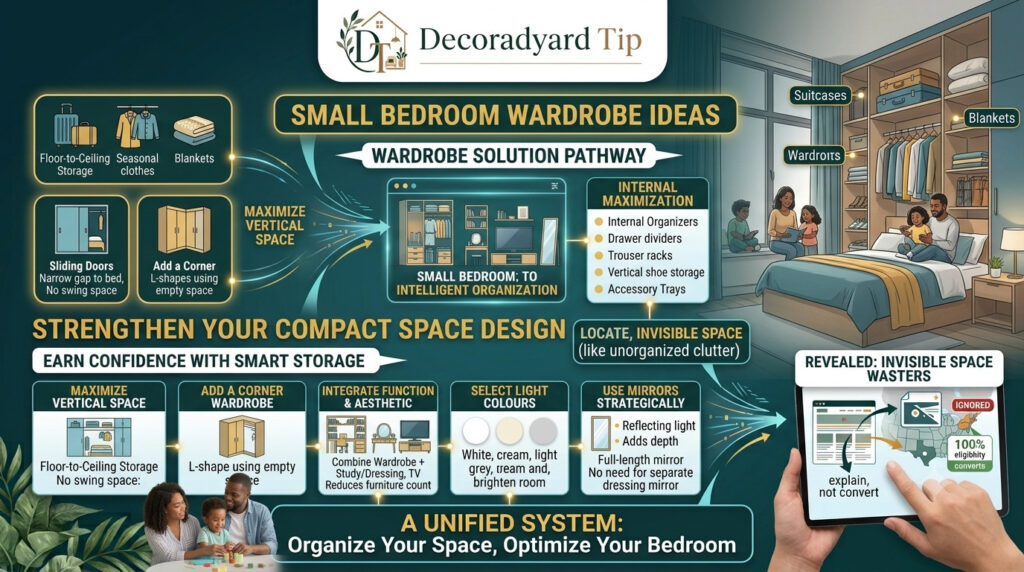
Choose Floor-to-Ceiling Storage
A full-height wardrobe uses the space above standard wardrobe height. The upper section can be used for suitcases, blankets, seasonal clothes, and less frequently used items.
Use Sliding Doors
Sliding doors are practical when there is limited space between the wardrobe and the bed. Mirrored sliding doors can also reflect light and make the room feel more spacious.
Add a Corner Wardrobe
An L-shaped or corner wardrobe can utilize areas that might otherwise remain empty. This option is useful in rooms with an irregular layout.
Combine the Wardrobe with a Study or Dressing Unit
A custom wardrobe can be extended to include a desk, dressing table, bookshelf, or television unit. Combining several functions into one unit reduces the need for separate furniture.
Select Light Colours
White, cream, beige, light grey, and pale wood finishes can make a compact bedroom appear brighter and less crowded.
Use Mirrors Strategically
A full-length mirror on a wardrobe door eliminates the need for a separate dressing mirror. It also adds depth to the room.
Install Internal Organizers
Pull-out baskets, drawer dividers, trouser racks, vertical shoe storage, and accessory trays help maximize every section of a small wardrobe.
Benefits of Wardrobe
| Wardrobe Feature | Main Benefit | Suitable For |
| Sliding doors | Saves floor space | Small and compact bedrooms |
| Hinged doors | Provides full internal access | Medium and large bedrooms |
| Floor-to-ceiling design | Maximizes vertical storage | Bedrooms with limited floor space |
| Built-in shelves | Keeps folded items organized | Everyday clothing and accessories |
| Internal drawers | Stores small and valuable items securely | Jewellery, documents, and accessories |
| Mirrored doors | Makes the room appear brighter and larger | Small or dark bedrooms |
| Loft storage | Stores seasonal and rarely used belongings | Luggage, bedding, and winter clothing |
| Pull-out shoe rack | Keeps footwear neat and accessible | Large shoe collections |
| Integrated lighting | Improves visibility inside the wardrobe | Deep or walk-in wardrobes |
| Adjustable shelves | Allows flexible storage arrangements | Changing storage requirements |
| Separate hanging sections | Prevents long clothes from creasing | Dresses, coats, shirts, and trousers |
| Corner wardrobe | Uses difficult or unused spaces | Small or irregularly shaped rooms |
Essential Wardrobe Planning Ideas
Good wardrobe design begins with understanding your storage requirements. These wardrobe planning ideas can help you avoid common design mistakes.
1. Review Your Belongings
Before you start planning the inside layout, think about what kind of stuff you want to keep inside. Someone with lots of formal clothes may need extra hanging space, while someone with a vast collection of folded clothes may need more shelves and drawers.
2. Measure the Available Space
Measure the wall width, ceiling height, floor area, skirting, windows, electrical points, and nearby furniture. Accurate measurements are especially important for built-in and floor-to-ceiling wardrobes.
3. Select the Right Door Type
Choose hinged doors when there is sufficient floor clearance and complete wardrobe access is important. Choose sliding doors for compact rooms or wide wardrobe units.
4. Divide the Internal Layout
Create separate zones for:
- Long hanging clothes.
- Short hanging clothes.
- Folded garments.
- Shoes.
- Bags.
- Accessories.
- Bedding.
- Seasonal items.
- Valuables.
Frequently used belongings should remain at an easy-to-reach height, while rarely used items can be stored in upper sections.
5. Include Drawers and Organizers
Drawers are useful for undergarments, socks, jewellery, watches, belts, and other small items. Dividers prevent these belongings from becoming mixed or disorganized.
6. Plan for Lighting
Internal LED lights improve visibility, especially in deep wardrobes and walk-in closets. Sensor lights that switch on when the door opens are both practical and energy-efficient.
7. Consider Ventilation
Wardrobes should not trap excessive moisture. Allow for air circulation, particularly in humid locations. Moisture absorbers and ventilated shutters may also help protect clothes.
8. Select Durable Materials and Hardware
The wardrobe body, doors, hinges, handles, channels, and drawer runners should be chosen for regular use. High-quality hardware improves movement, reduces noise, and increases the lifespan of the wardrobe.
9. Match the Bedroom Interior
The finish of the wardrobe should be in keeping with the bed, flooring, wall colours, drapes and lights. Matching in the same colour everywhere is not necessary, but complementary colours and textures can provide a more balanced interior.
10. Plan for Future Storage
Storage needs often increase over time. Include adjustable shelves, an additional hanging section, or some empty space for future belongings.
Wardrobe Colour and Finish Ideas
The right colour can change how large, bright, or luxurious the bedroom appears.
White and Neutral Wardrobes:
White, cream, beige, and light grey wardrobes create a bright and calming environment. They are particularly suitable for small bedrooms.
Natural Wood Finishes:
Wood tones add warmth and work well with neutral walls, wooden flooring, and soft lighting.
Two-Tone Wardrobes:
Combining two colours or materials creates visual interest. Popular combinations include white and wood, grey and oak, or beige and dark brown.
Glass and Mirror Finishes:
Glass panels give wardrobes a lighter and more sophisticated look. Mirrors improve functionality while visually expanding the room.
Matte Finishes:
Matte laminates and acrylic surfaces provide a soft, understated appearance. They are suitable for minimalist interiors.
Glossy Finishes:
Glossy panels reflect light and create a polished modern look. However, fingerprints and marks may be more noticeable.
Common Wardrobe Design Mistakes to Avoid
Even an attractive wardrobe can become inconvenient when the internal planning is poor. Avoid these common mistakes:
- Creating too few shelves or drawers.
- Ignoring door-opening clearance.
- Installing hanging rails at unsuitable heights.
- Making shelves too deep.
- Forgetting dedicated shoe storage.
- Blocking electrical outlets or switches.
- Using low-quality tracks and hinges.
- Ignoring lighting and ventilation.
- Choosing style without considering practical storage.
- Failing to leave room for future belongings.
How to Choose the Best Wardrobe for Your Bedroom
A sliding wardrobe from floor to ceiling with mirrors and organizers inside is generally the best solution for a tiny bedroom. Medium room hinged door wardrobes are available with versatile interior storage and simple access. A walk-in wardrobe in a huge master bedroom offers a separate dressing area and plenty of storage.
If you desire durability, warmth and a timeless look, a wood wardrobe is a perfect choice. Wardrobe designs featuring shelves are fantastic for those who love folding their clothes or need structured storage for bags, accessories and bedding. The best wardrobe is not necessarily the biggest one. It’s the wardrobe that makes the best use of the space you have, and has the perfect storage sections for your everyday life.
Home Wardrobe Designs: Decoradyard Tip
Here at Decoradyard Tip we love helping people design attractive, organized and useful living spaces with practical home décor and storage solutions. Looking for fresh Wardrobe Designs, chic Home Curtain Designs or ideas for great Home Furniture? We aim to provide expert guidance and simple suggestions for all homes and lifestyles.
We offer professional Guest Posting and **Content Writing** service for businesses, bloggers and brands. We have informative home improvement and interior design articles. We publish your original content to improve online visibility, build authority and engage readers. Our seasoned writers will write well-researched articles, tailored to your audience and written to the latest in SEO best practice.
Learn more about our mission and the team behind our content on our About Us page. If you have any inquiries, collaboration opportunities or would want to discuss our Guest Posting or Content Writing services, please visit our Contact Us page. At Decoradyard Tip, we’re dedicated to helping you construct elegant, organized and comfortable homes with classic furniture ideas, smart storage solutions and inspired interior design tips.
Conclusion
Today’s wardrobes are a blend of storage, organization and interior design all rolled into one vital bedroom feature. Hinged door closets provide you full access, sliding door wardrobes conserve precious space and walk-in wardrobes give you a wonderful, highly personalised storage experience.
Whether you choose a traditional wood wardrobe, mirrored sliding unit or wardrobe designs with shelves, planning is the key to a functional end. Think about the size of the space, how the doors open, the internal divisions, the materials and the lighting, and your future storage needs and you will be able to design a wardrobe that will keep your bedroom beautiful, comfortable and tidy for years to come.
FAQs
Best wardrobe design for a modern bedroom What is?
Handleless closets, sliding wardrobes, walk-in wardrobes, mirrored wardrobes and floor to ceiling designs are the most popular for modern bedrooms since they blend style with practical storage.
Are Custom Wardrobes Worthwhile?
Yes. Custom wardrobes are made to fit into your space exactly, provide you the maximum amount of storage space, complement your interior decor and provide you with a tailored storage solution.
What is the best way to arrange my wardrobe?
Keep everything organized with drawer dividers, storage boxes, hanging organizers, pull-out baskets, adjustable shelves, and distinct compartments for clothing, shoes, accessories, and seasonal goods.